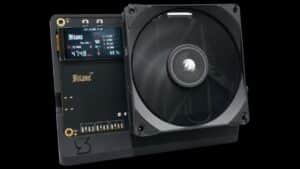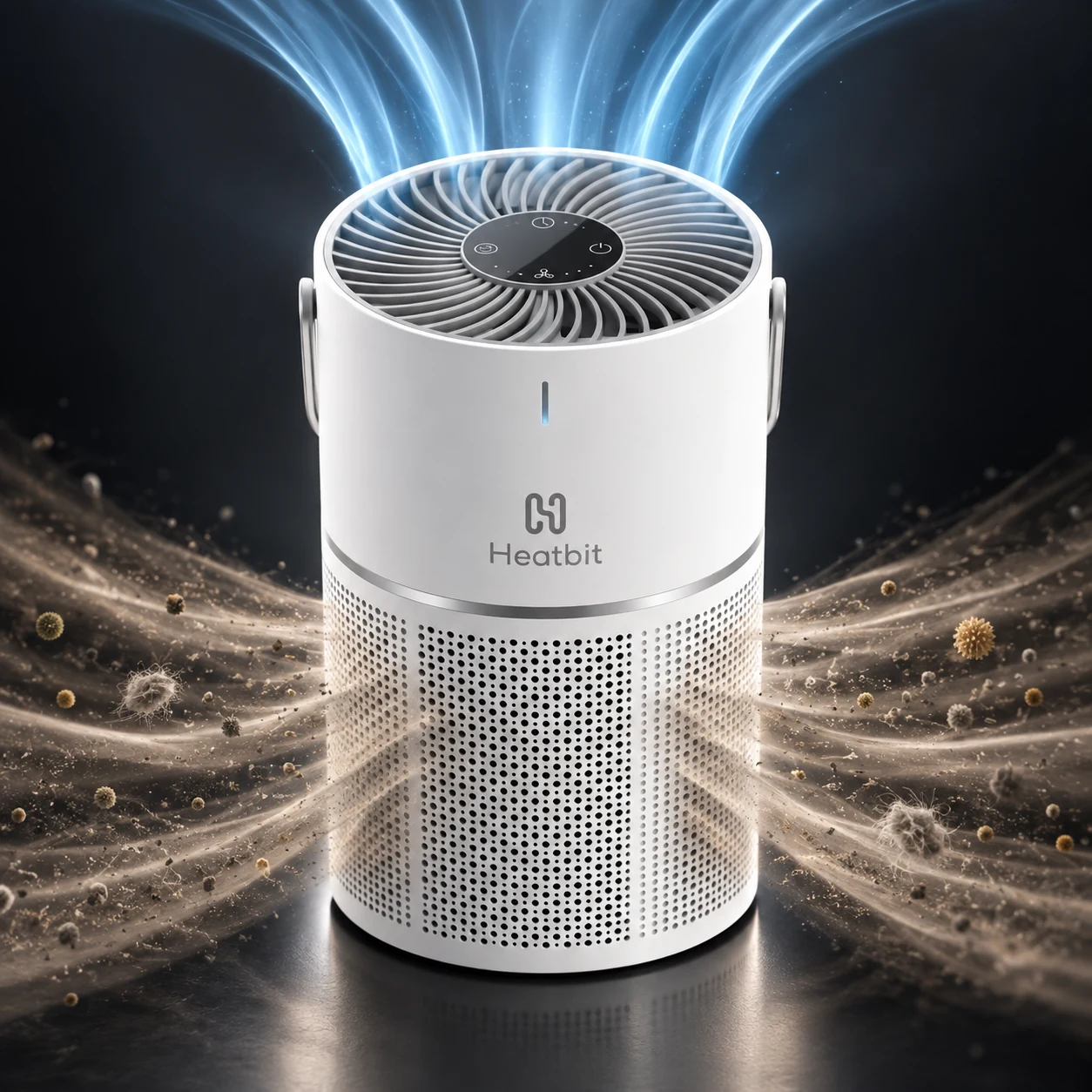
The Heatbit Bitair is the first air purifier designed to mine Bitcoin. It combines three-stage room-air filtration with a real 1.2 TH/s SHA-256 miner for people who want an always-on home appliance rather than a conventional exposed mining board, loud industrial ASIC, or high-wattage space heater.
Solo Satoshi will distribute Bitair through its Conroe, Texas operation, giving US buyers a specialist Bitcoin-hardware source, domestic support contact, and local pickup option when inventory is available.
What Is the Heatbit Bitair?
As the first air purifier built around an integrated Bitcoin mining chip, Bitair establishes a new home-appliance category. It pulls room air through a lower 360-degree intake, passes it through a three-layer filter, and exhausts cleaned air through the top grille. At the same time, its ASIC performs SHA-256 hashes and can run in solo or pool mode.
This combination changes the product’s value proposition. Mining is not the only reason for the device to be running: it continues to circulate and filter indoor air whether or not mining produces a reward.
Heatbit Bitair Specifications
| Specification | Published Bitair figure |
|---|---|
| Hashrate | 1.2 TH/s |
| Algorithm | SHA-256 |
| Maximum power | 25W total; mining chip 17W |
| Mining efficiency | Approximately 15 J/TH |
| Mining modes | Solo or pool |
| Filtration | Pre-filter, true HEPA, and activated carbon |
| Particle capture | 99.97% of airborne particles 0.3 microns and larger |
| Room coverage | Up to 200 sq ft |
| Particle CADR | 100 m³/h |
| Gaseous pollutant CADR | 80 m³/h |
| Airflow capacity | 100 CFM |
| Noise | 25 to 44 dB |
| Dimensions | 158 x 259 mm |
| Power connection | USB-C |
| App | Heatbit app for setup, mining, air data, and filter status |
| Warranty | 12-month Heatbit manufacturer warranty |
How Air Moves Through Bitair
Bitair uses a bottom-to-top airflow path:
- Intake: Air enters through the perforated lower shell from around the device.
- Pre-filter: The first layer catches larger material such as hair, lint, and visible dust.
- True HEPA layer: The pleated media captures fine airborne particles. Heatbit publishes 99.97% capture at 0.3 microns and larger.
- Activated carbon: Carbon media adsorbs many odor-producing compounds and VOCs.
- Exhaust: The fan returns filtered air through the spiral top grille.
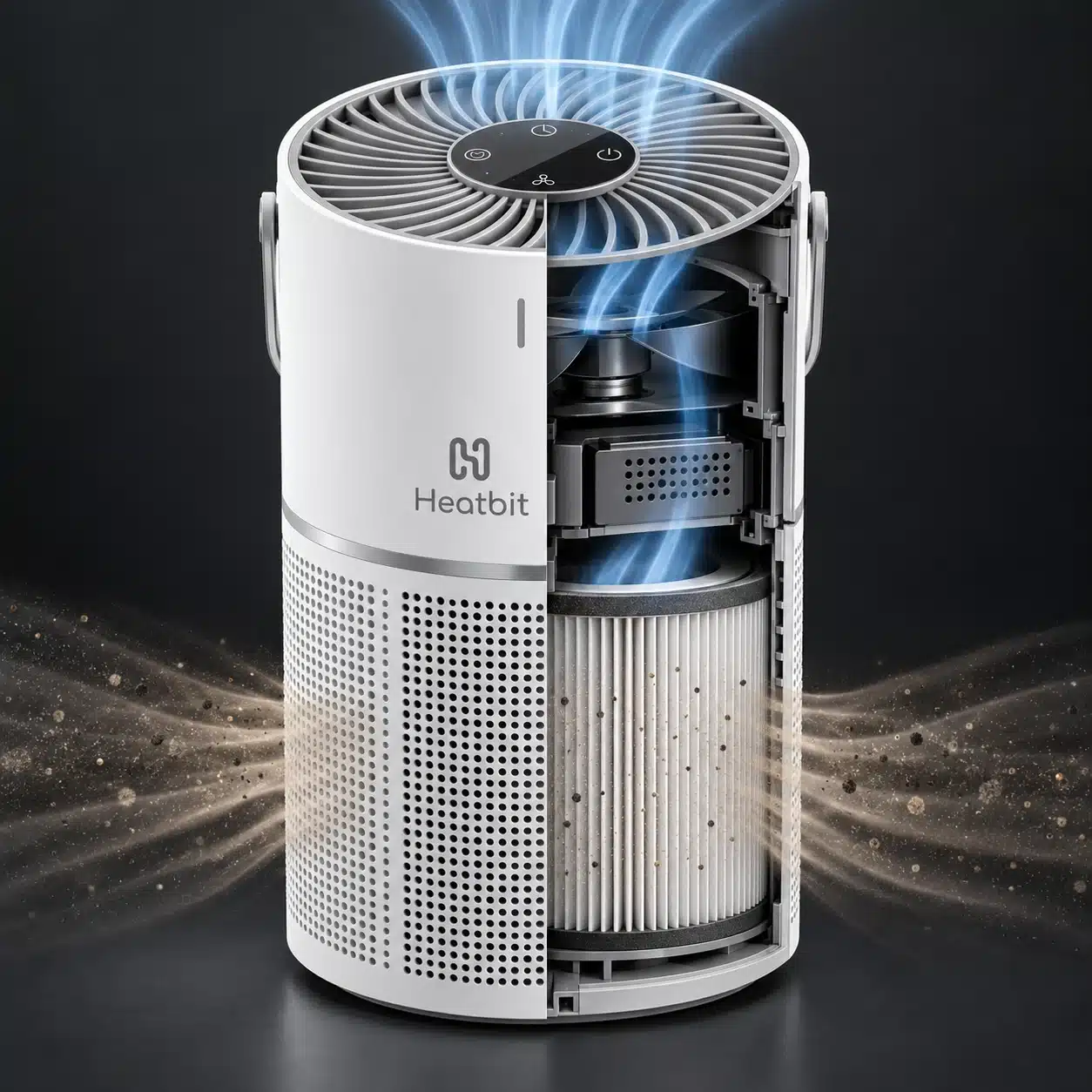
Filter performance depends on fan speed, filter condition, room layout, placement, and replacement intervals.
Seasonal Pollen and Outdoor Air
A HEPA purifier can capture airborne pollen that reaches the filter, but it cannot stop new pollen from entering through an open door or window. During high-pollen periods, close exterior openings when practical, place Bitair where room air can circulate around its lower intake, and avoid hiding it behind curtains or furniture.
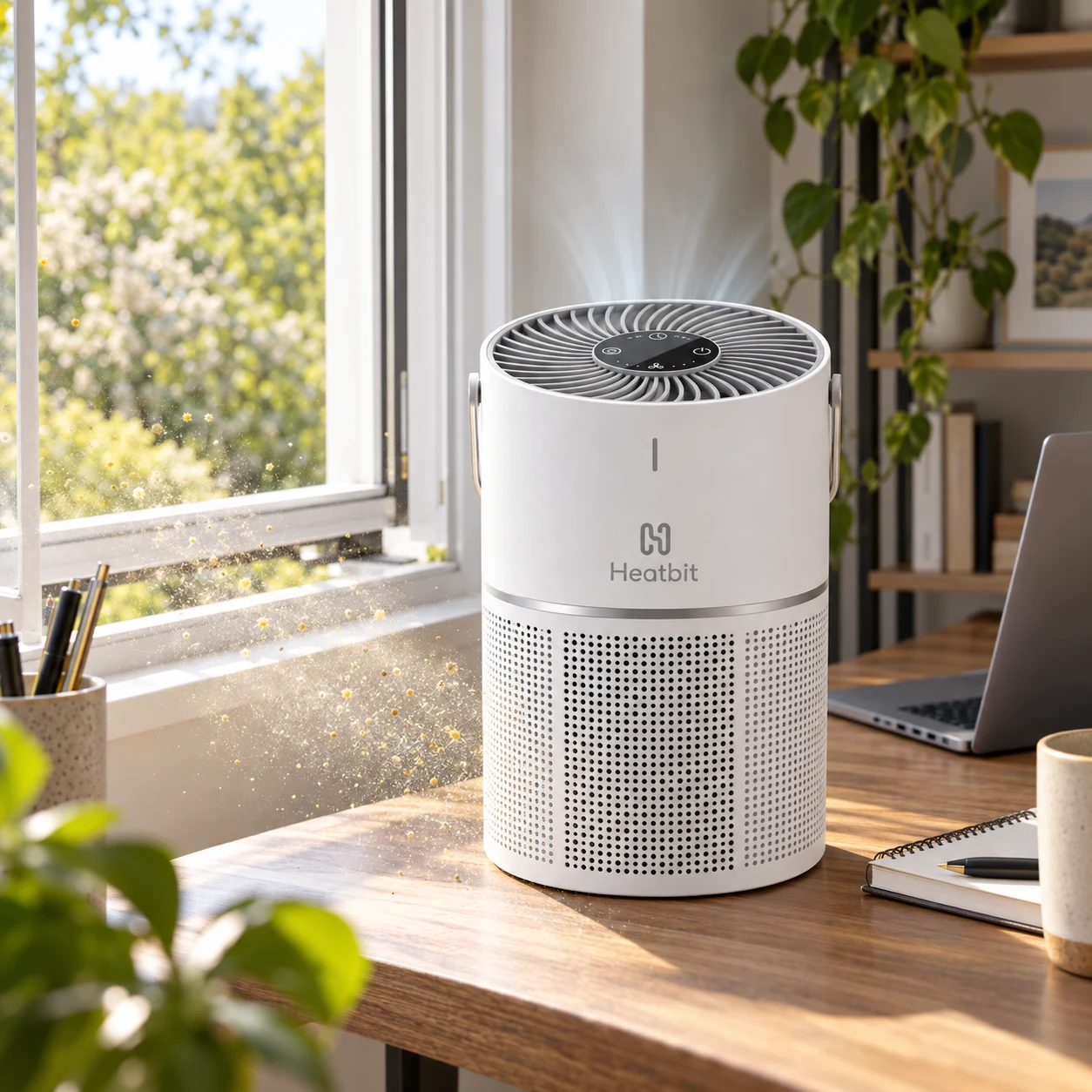
Air purification is one part of exposure control. Cleaning surfaces, washing bedding, maintaining HVAC filters, and controlling outdoor-air entry remain important.
How the Bitcoin Miner Fits Into an Air Purifier
The mining chip repeatedly hashes candidate Bitcoin block headers, the core computation behind how Bitcoin mining works. That computation consumes electricity and produces a small amount of heat. Bitair’s airflow manages the electronics while also moving room air through the filter. At 1.2 TH/s it is a participation-focused home miner, not a substitute for an industrial ASIC measured in hundreds of terahashes per second.
The mining function is real, but rewards are never guaranteed. Network hashrate, network mining difficulty, uptime, selected mode, fees, and payout rules all affect results.
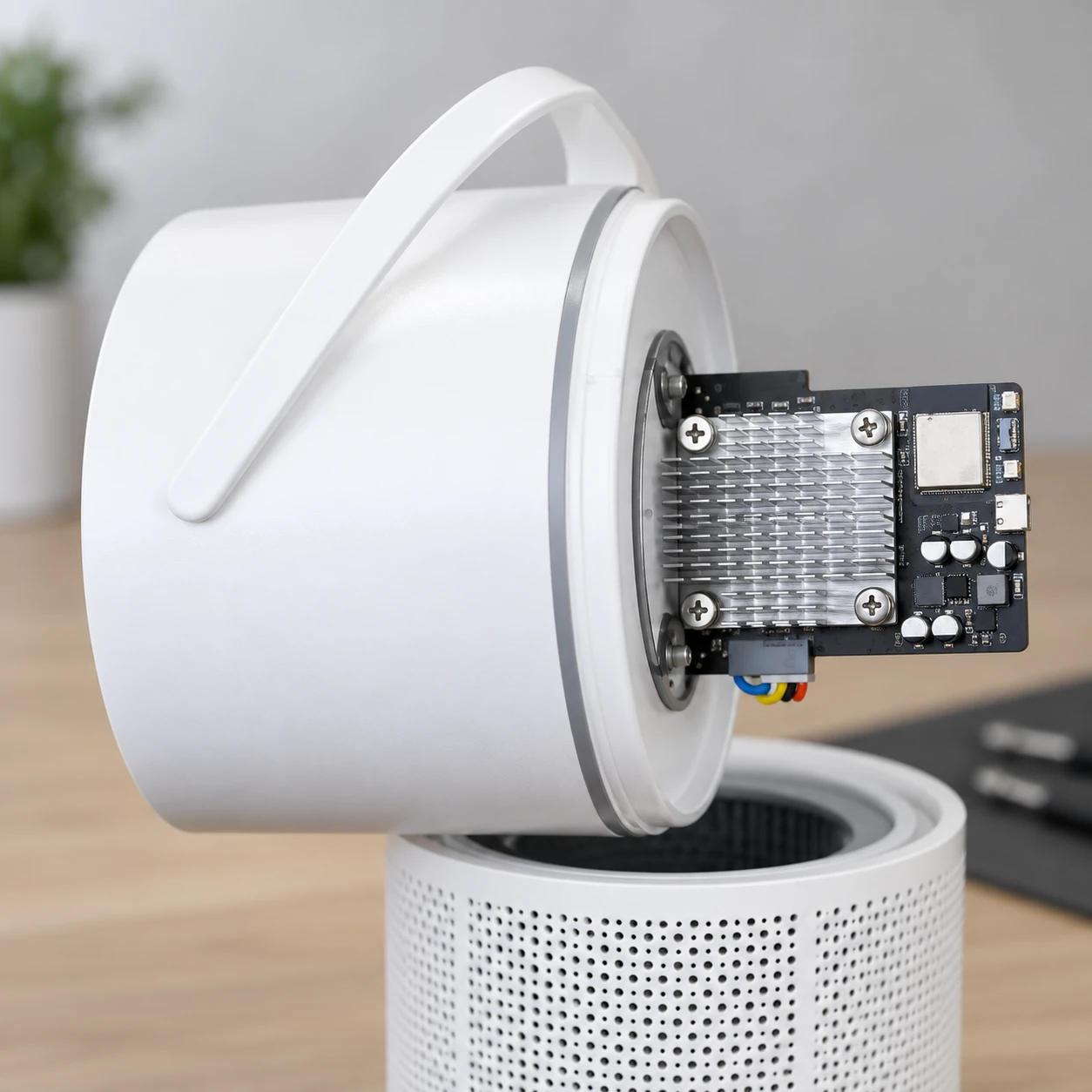
The removable upper assembly carries the compact mining PCB, aluminum heatsink, capacitors, connectors, and short wiring harness above the cylindrical filter body. Opening the enclosure may affect warranty coverage and can damage wiring, seals, or filtration components, so owners should follow Heatbit maintenance instructions.
Solo Mining Versus Pool Mining
Solo Bitcoin mining and pool mining perform the same SHA-256 work but distribute rewards differently.
| Mode | Reward pattern | Best understood as |
|---|---|---|
| Solo | No payout unless the miner finds a valid block; a successful find earns the available block reward and fees under the configured service’s terms. | A very-low-probability, high-variance lottery-style event |
| Pool | Hashrate contributes to a pool and rewards are allocated under that pool’s payout method, thresholds, and fees. | Smaller and more regular credited earnings |
The Heatbit app allows mode changes without rebuilding a conventional miner configuration. Before mining, verify the payout destination, compare solo mining pools, and understand the selected service’s custody, fee, and withdrawal rules.
What Does Bitair Cost to Run?
At the published 25W maximum, continuous operation uses about 0.60 kWh per day, 18.25 kWh per average month, or 219 kWh per year. Actual use may be lower depending on fan and mining settings. Use the Bitcoin mining profitability calculator to test electricity-rate and network assumptions.
| Electricity rate | Approximate monthly cost | Approximate annual cost |
|---|---|---|
| $0.10/kWh | $1.83 | $21.90 |
| $0.15/kWh | $2.74 | $32.85 |
| $0.20/kWh | $3.65 | $43.80 |
| $0.30/kWh | $5.48 | $65.70 |
Filter replacement is a separate operating cost. Heatbit currently lists replacement filters at $20. Use the app’s filter-life indicator and the manufacturer instructions rather than replacing solely by calendar date.
Pets, Dander, Hair, and Household Dust
Homes with pets generate a mixture of visible hair, fabric lint, tracked-in soil, and microscopic dander. Bitair’s outer pre-filter is intended to intercept larger debris before it loads the finer HEPA media. The HEPA layer handles smaller suspended particles that reach the device.
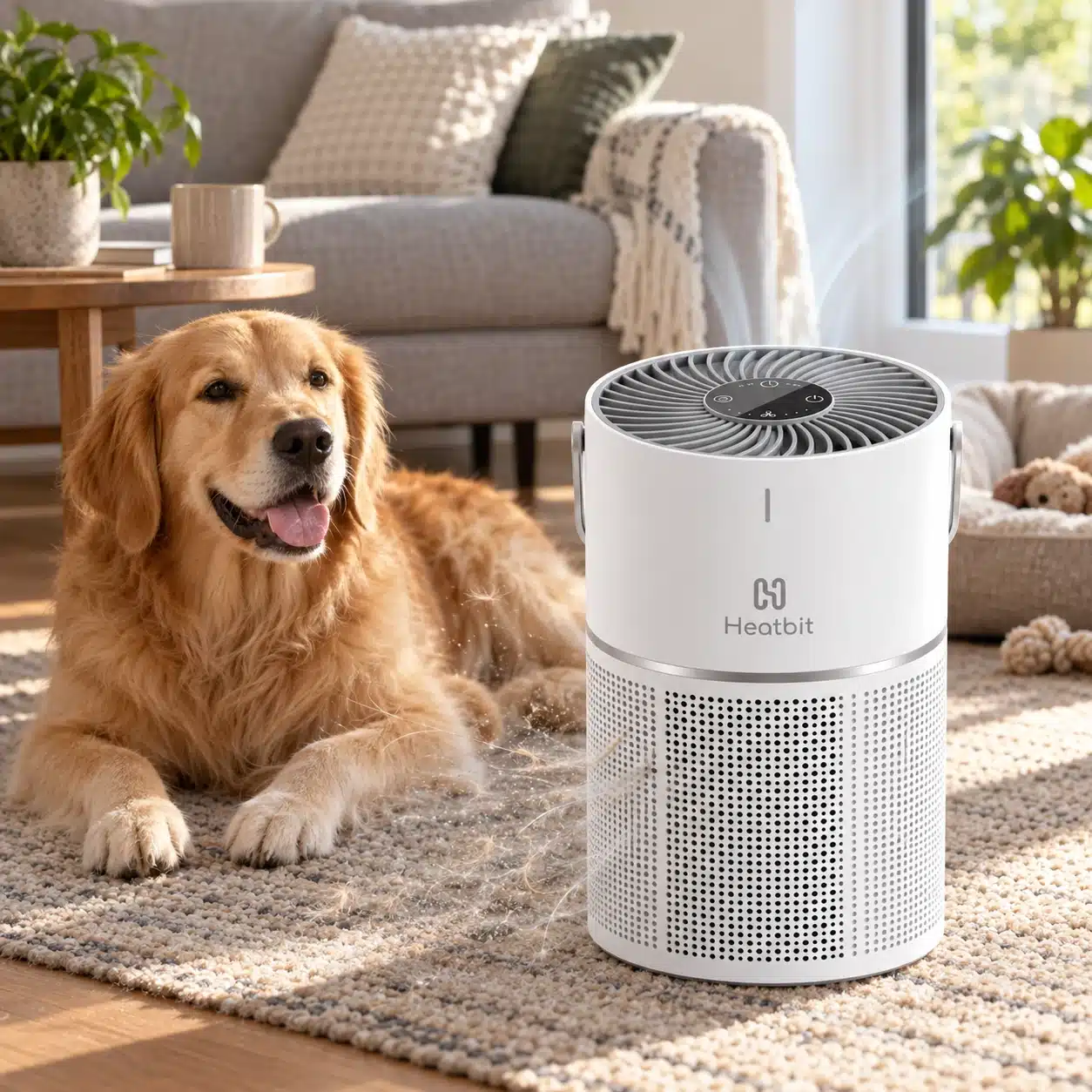
Place the purifier where the lower intake remains unobstructed. Vacuuming, laundering pet bedding, grooming, and timely filter replacement are still necessary because an air purifier cannot remove debris that has already settled onto floors and furniture.
Where Bitair Fits Best
- Bedroom: Published noise begins at 25 dB in its quietest mode.
- Home office: The 200 sq ft coverage target suits many workspaces and studios.
- Apartment: USB-C power and compact dimensions avoid the electrical and ventilation demands of industrial miners.
- Bitcoin education: App-based hashrate data makes SHA-256 mining tangible without an exposed board.
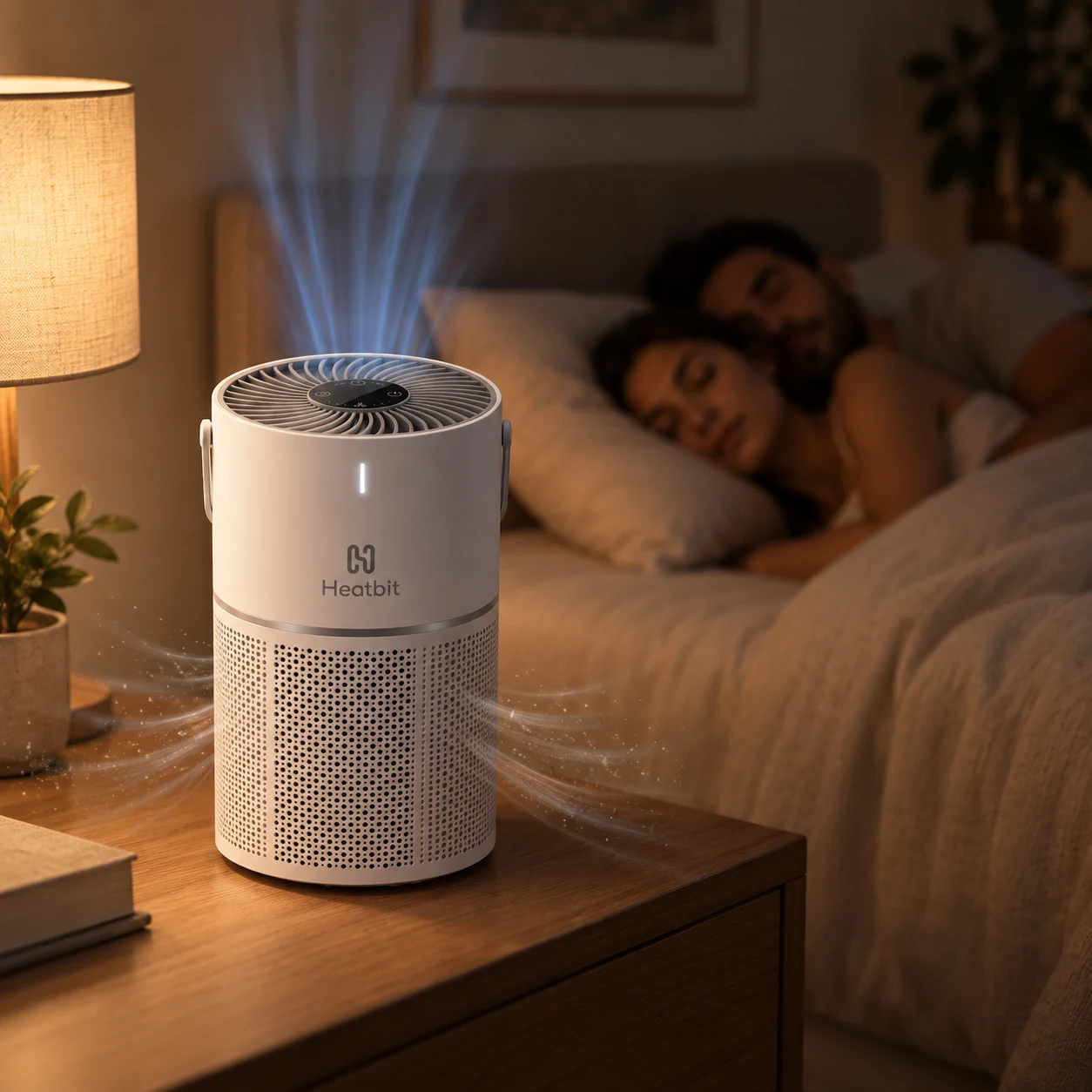
Placement and Filter Maintenance
- Leave open space around the perforated lower intake and top exhaust.
- Use a stable, dry surface where curtains, bedding, papers, and pet toys cannot block airflow.
- Check filter life in the Heatbit app and inspect the pre-filter more often in dusty or pet-heavy rooms.
- Replace the filter according to condition and manufacturer guidance. A loaded filter reduces airflow and purification performance.
- Power the device with the specified USB-C supply and keep liquids away from the controls and exhaust grille.
Privacy, Wi-Fi, and App Setup
Bitair uses Wi-Fi and the Heatbit app for onboarding, monitoring, air information, mining controls, and filter status. Before setup, review the app permissions, use a strong home-network password, keep router firmware current, and confirm the Bitcoin payout destination. Connected convenience is different from an offline miner configured entirely through a local web interface.
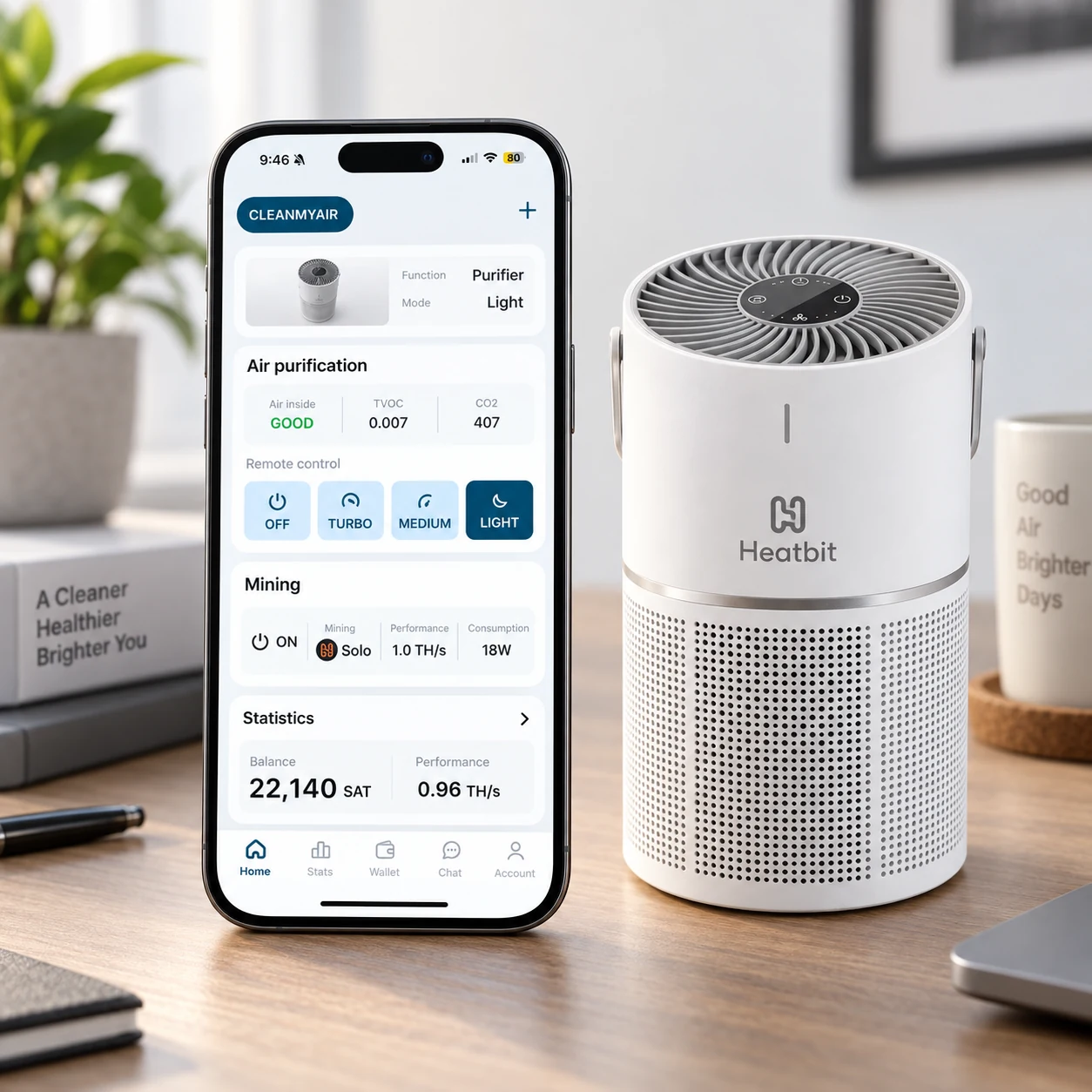
The app can bring purifier controls, air-quality readings, mining status, hashrate, consumption, statistics, and wallet information into one interface. Treat displayed earnings and fiat equivalents as changing estimates, verify withdrawal details, and never interpret a short performance sample as a guaranteed long-term result.
Important Limitations
- Bitair is not expected to produce predictable solo-mining income.
- It does not heat a room like Heatbit’s high-power mining heaters.
- Air-purifier coverage is affected by doors, ceiling height, room shape, placement, and filter condition.
- The HEPA claim applies to particle capture by the filter and does not mean the device removes every contaminant or prevents illness.
- Wi-Fi and the Heatbit app are required for setup and connected features.
Solo Satoshi Distribution and Support
Solo Satoshi will distribute the Heatbit Bitair from Conroe, Texas. The goal is to provide a clear US product page, Bitcoin-hardware support, parcel shipping, and storefront pickup when stock is available. Availability updates and ordering details will be maintained on the Heatbit Bitair product page.
Solo Satoshi has shipped more than 60,000 devices to customers in over 70 countries. Bitair joins a catalog focused on approachable home mining, self-custody, nodes, and Bitcoin infrastructure.
What is the Heatbit Bitair?
How does air move through Bitair?
What particles can the Bitair filter capture?
Can Bitair help with pet dander and hair?
Can Bitair remove pollen from a room?
What room size does Heatbit recommend?
How loud is Heatbit Bitair?
Is Bitair a real Bitcoin miner?
What is the difference between solo and pool mode?
Will Heatbit Bitair make a profit?
How much electricity does Bitair use?
Does Bitair need special wiring?
Does Bitair require Wi-Fi and an app?
How often should the Bitair filter be replaced?
Where will Solo Satoshi distribute Bitair from?
Specifications reflect Heatbit’s published information available when this article was updated. Mining performance, network conditions, app functions, pricing, and availability can change.