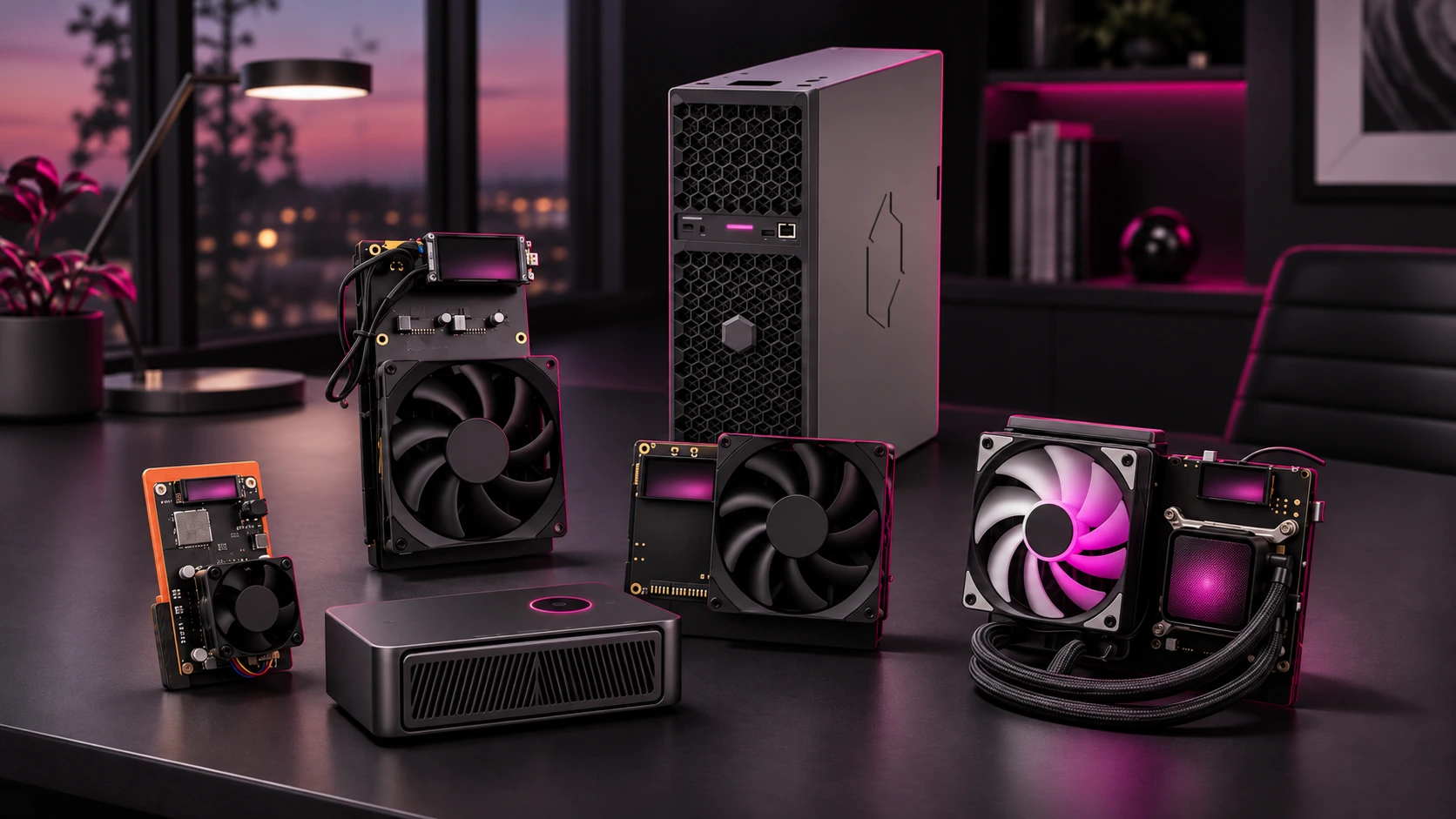
Solo Satoshi sells the miners in this guide.
A bitcoin lottery miner is a small home ASIC that gives you a fresh draw on every Bitcoin block.
The best bitcoin lottery miner for most people is the Bitaxe Gamma 602 as a first ticket, with the Naja Duo or NerdQaxe++ as the step up.
The right one for you depends on your desk, your outlet and your budget.
This guide ranks nine home miners we sell by odds, noise and power. Specs and prices were checked on November 1, 2026 (last updated: November 1, 2026).
Browse the full lineup in our bitcoin lottery miners category, or jump straight to the odds table below.
Quick answer: which bitcoin lottery miner should you buy?
- Cheapest way in: the Bitaxe Gamma 602, about 1.2 TH/s at 18 to 20 W, from $61.
- Step-up Bitaxe boards: the Gamma Duo 650 (about 1.63 TH/s) and the GT 801 (about 2.15 TH/s).
- Most efficient small miner: the Naja Duo, about 4.4 TH/s at about 42 W.
- Color screen: the Nerdaxe Gamma (about 1.2 TH/s) or the NerdQaxe++ (about 4.8 TH/s).
- Plug in and use an app: the Avalon Nano 3S, 6 TH/s, with a published 30 to 40 dB range.
- Quiet and strong: the liquid-cooled Gamma Hex, about 8.4 TH/s with a listed 30 dB (sold out when we checked).
- Biggest ticket: the Avalon Q, 90 TH/s at a rated 1,674 W and 45 to 65 dB.
- Your odds: a 1.2 TH/s miner has roughly a 1 in 16,900 chance of finding a block in a year, and the 90 TH/s Avalon Q about 1 in 226. Treat each one as a lottery ticket and a hobby.
New to lottery mining? The short version
A lottery miner works on a solo pool, so there are no steady payouts. One lucky hash wins the whole block reward, and the rest of the time you get nothing.
New to this? Start with our lottery mining explainer for the concept, or the complete solo mining guide for the full background.
Which are the best bitcoin lottery miners? Compared (2026)
The best bitcoin lottery miner depends on your priority:
- Lowest price: the Bitaxe Gamma 602.
- Best efficiency among small miners: the Bitaxe Naja Duo.
- App control and a published 30 to 40 dB rating: the Avalon Nano 3S.
- Most hashrate: the Avalon Q.
All figures are stock settings from each product page, checked on November 1, 2026.
Prices are the lowest starting price shown on each product page and can change. On most Bitaxe and Nerdaxe listings, a power supply or stand is an optional add-on.
| Miner | Stock hashrate and power | Noise | From |
|---|---|---|---|
| Bitaxe Gamma 602 | About 1.2 TH/s at 18 to 20 W | Not published | $61 |
| Nerdaxe Gamma | About 1.2 TH/s at about 18 W | Not published | $139 |
| Bitaxe Gamma Duo 650 | About 1.63 TH/s at about 25.8 W | Not published | $104.29 |
| Bitaxe GT 801 | About 2.15 TH/s at about 43 W | Not published | $173.99 |
| Bitaxe Naja Duo | About 4.4 TH/s at about 42 W | Fan rated 22.4 dBA max | $366 |
| NerdQaxe++ Revision 7 | About 4.8 TH/s at about 69.5 W | Not published | $189.99 |
| Avalon Nano 3S | 6 TH/s at up to 140 W | 30 to 40 dB published | $219 |
| Bitaxe Gamma Hex | About 8.4 TH/s at about 140 W | 30 dB listed | $396.99 (sold out) |
| Avalon Q 90 TH/s | 90 TH/s at 1,674 W rated | 45 to 65 dB | $1,349 |
The Bitaxe Gamma Hex was sold out when we checked on November 2, 2026, so check its product page for restock updates.
Prices and stock change, so each product page shows what is available today.
The best bitcoin lottery miners, one by one
Each pick gives the reason it earns its label, then a quick pros and cons line. Labels rest on published specs only: price, hashrate, efficiency in J/TH and published noise.
Every miner we ship is bench-tested at our shop in Conroe, TX: we power it on, confirm it hashes, check temperatures, and verify the firmware version before it leaves.
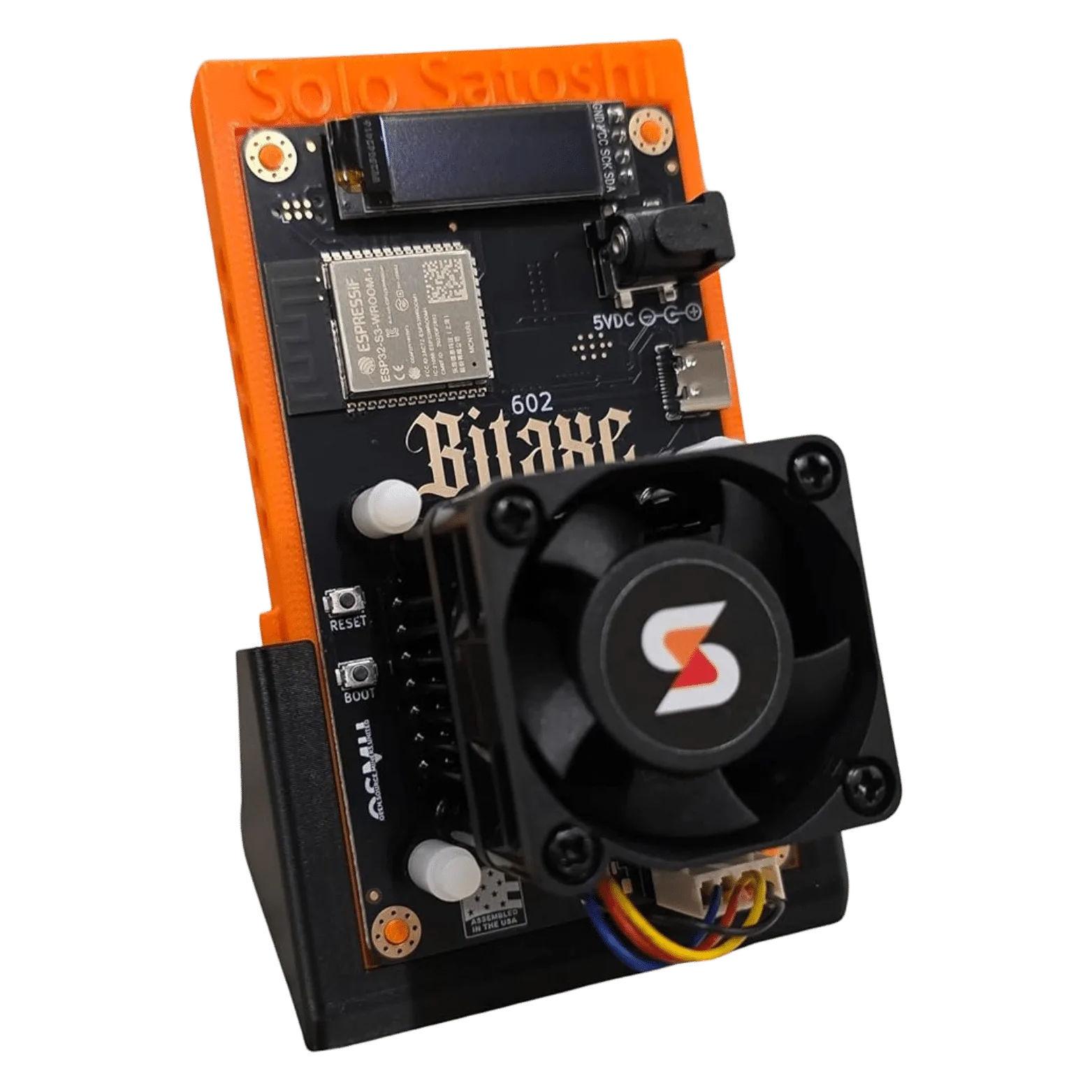
Bitaxe Gamma 602: the cheapest way to start
 View Bitaxe Gamma 602
Why it is a pick: it is the lowest-priced board here, with one BM1370 chip at about 1.2 TH/s, and its product page shows 4.98 out of 5 from 218 customer ratings.
Pros: open source, 5V power and assembled and tested in the USA. Cons: the longest odds on this list.
Bitaxe Gamma Duo 650: a second chip at a small power cost
 View Bitaxe Gamma Duo 650
Why it is a pick: a second BM1370 lifts hashrate about 36% above the 602 for only about 25.8 W.
Pros: a small step up in odds in the same compact format. Cons: 5V only, so never connect a 12V adapter.
Nerdaxe Gamma 2.3: the big color screen
 View Nerdaxe Gamma 2.3
Why it is a pick: its 1.9-inch color display shows hashrate and pool status without opening a browser.
Pros: color screen and an open-source design. Cons: it matches the Gamma 602 on hashrate and costs more, so the screen is what you pay for.
Bitaxe GT 801: more hashrate on 12V
 View Bitaxe GT 801
Why it is a pick: it is the clear Bitaxe step up in hashrate, about 2.15 TH/s from two BM1370 chips.
Pros: more tickets per block and assembled and tested in the USA. Cons: 12V XT30 only, and about 43 W.
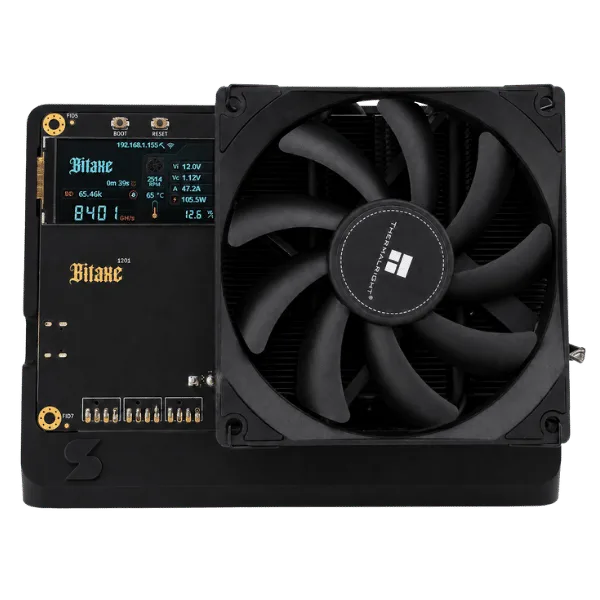
Bitaxe Naja Duo: best efficiency of the small miners
 View Bitaxe Naja Duo
Why it is a pick: its two 3 nm BM1373 chips give the lowest stock J/TH here, about 9.5, at about 4.4 TH/s.
Pros: efficiency and a 92 mm fan rated 22.4 dBA max. Cons: at $366 it costs more than twice as much as the GT 801.
NerdQaxe++ Revision 7: four chips, auto fan and a color screen
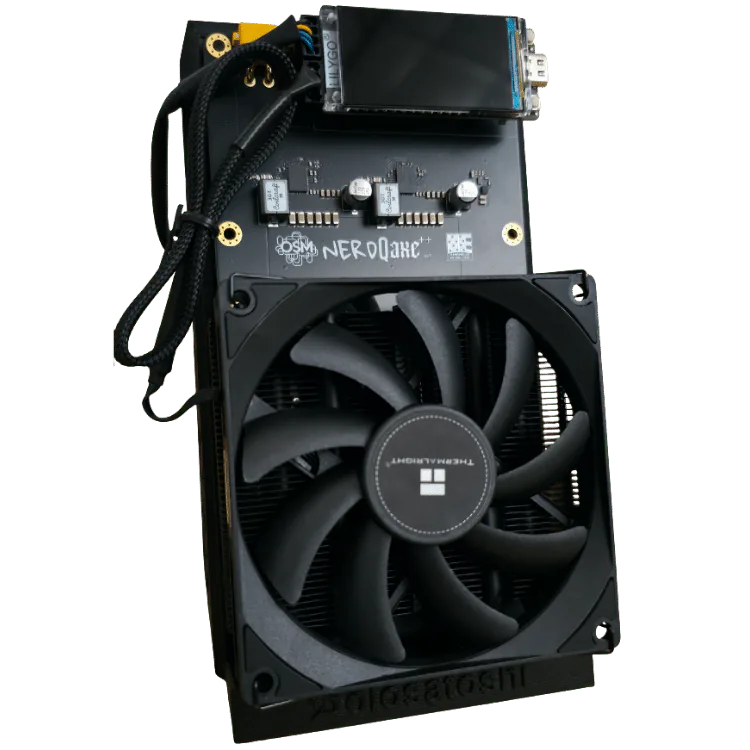 View NerdQaxe++ Revision 7
Why it is a pick: four BM1370 chips give mid-size hashrate, about 4.8 TH/s at about 69.5 W, with live stats on a color screen.
Pros: strong hashrate for under $200 and automatic fan control. Cons: no published noise figure.
Avalon Nano 3S: the plug-in-and-go desk miner
 View Avalon Nano 3S
Why it is a pick: it runs from an app instead of a web dashboard, with a 140 W adapter included. Its product page shows 4.91 out of 5 from 32 customer ratings.
Pros: three power modes and a published 30 to 40 dB range. Cons: up to 140 W, and Canaan recommends its own USB Wi-Fi module.
See how it fits the rest of the family in our Avalon home series guide.
Bitaxe Gamma Hex: six chips and liquid cooling
 View Bitaxe Gamma Hex
Why it is a pick: six BM1370 chips and an all-in-one liquid cooler give about 8.4 TH/s with a listed 30 dB. Its product page lists 5.00 out of 5 from 12 customer ratings.
Pros: the most hashrate of any Bitaxe board here, with a low noise rating. Cons: the RGB fan lighting has no off switch, and it needs 12V through a 6-pin PCIe connector.
Avalon Q: the biggest lottery ticket in a home miner
 View Avalon Q
Why it is a pick: at 90 TH/s it is the biggest ticket here, about 75 times the 1.2 TH/s boards. Customers give it 5.00 out of 5 across 12 ratings on its product page.
Pros: Ethernet, an included Wi-Fi module and three power modes. Cons: rated 1,674 W, 45 to 65 dB and 10.5 kg, so it needs a proper circuit and a room that can take the noise.
What are the odds of finding a block with a lottery miner?
Your chance per block is your hashrate divided by the whole network’s hashrate.
On November 1, 2026, the network ran at about 1,069 EH/s, according to mempool.space network data.
At that rate, a 1.2 TH/s miner has about a 1 in 16,942 chance of finding a block in a year. The 90 TH/s Avalon Q has about 1 in 226.
There is no streak and no “due” block: every hash is a fresh draw, and a new block arrives about every ten minutes.
The table multiplies the per-block odds across 52,560 blocks, one year at 144 a day, and compares each per-block chance with one Powerball jackpot ticket in the last column.
| Miner | Odds per block | Odds in one year | Vs Powerball ticket |
|---|---|---|---|
| Bitaxe Gamma 602 (1.2 TH/s) | 1 in 890 million | 1 in 16,942 | 3.1x longer |
| Nerdaxe Gamma (1.2 TH/s) | 1 in 890 million | 1 in 16,942 | 3.1x longer |
| Bitaxe Gamma Duo 650 (1.63 TH/s) | 1 in 656 million | 1 in 12,473 | 2.2x longer |
| Bitaxe GT 801 (2.15 TH/s) | 1 in 497 million | 1 in 9,456 | 1.7x longer |
| Bitaxe Naja Duo (4.4 TH/s) | 1 in 243 million | 1 in 4,621 | 1.2x better |
| NerdQaxe++ (4.8 TH/s) | 1 in 223 million | 1 in 4,236 | 1.3x better |
| Avalon Nano 3S (6 TH/s) | 1 in 178 million | 1 in 3,389 | 1.6x better |
| Bitaxe Gamma Hex (8.4 TH/s) | 1 in 127 million | 1 in 2,421 | 2.3x better |
| Avalon Q (90 TH/s) | 1 in 11.9 million | 1 in 226 | 24.6x better |
A Powerball jackpot ticket is 1 in 292,201,338, according to the Powerball prize chart. That column compares one draw only, not the prize.
Another way to read the yearly column: if 4,236 people each ran a NerdQaxe++ for a year, you would expect about one of them to find a block.
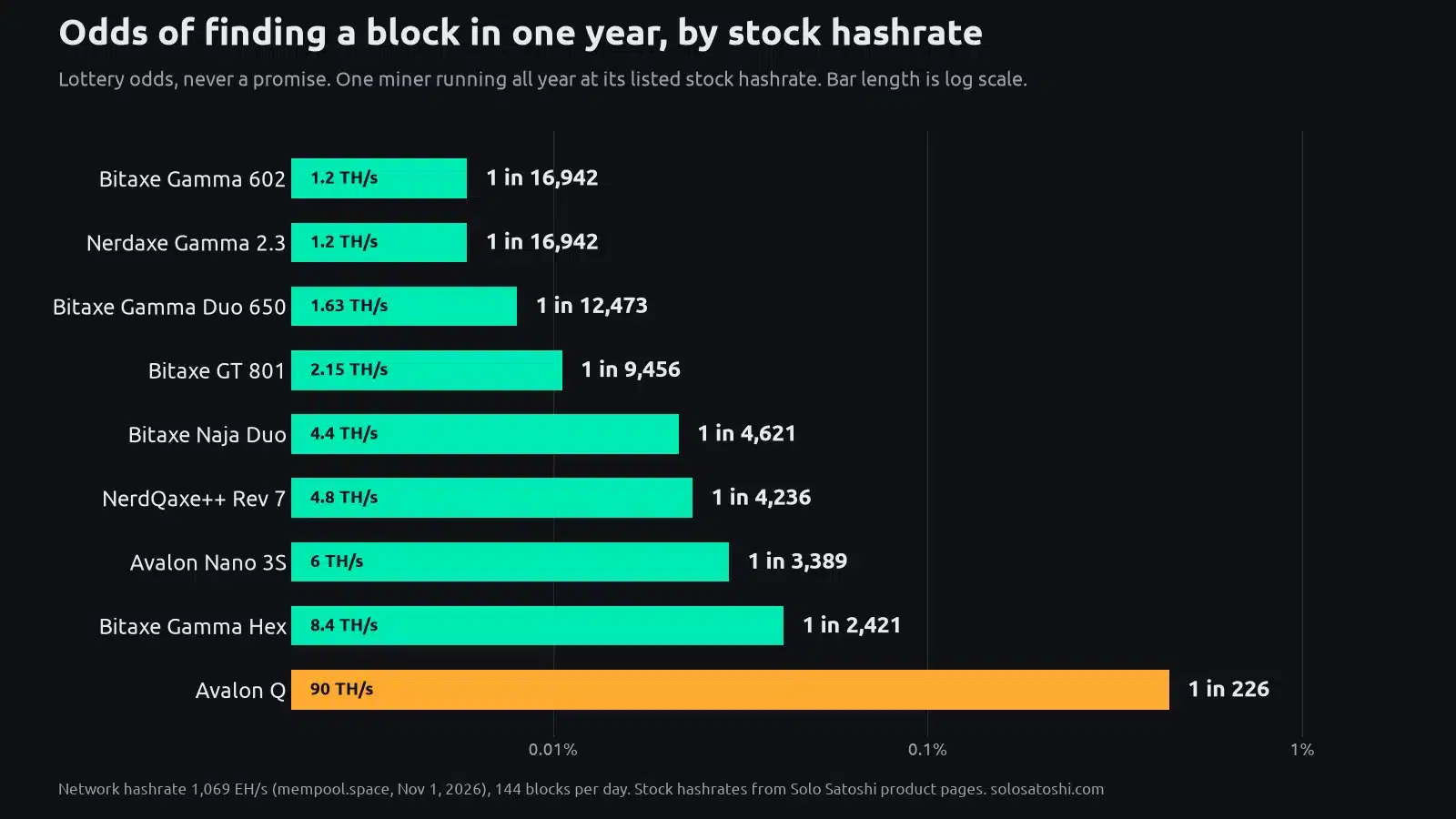
Two honest caveats. Network hashrate and difficulty move, so your odds shift, and these are statistical odds, not predictions: a miner can find a block on its first day or never.
Home miners really have found blocks. A single Bitaxe Supra found block 853,742 on July 24, 2024 through Solo CKPool.
Run your own numbers with our solo odds calculator, and keep in mind that network difficulty changes them over time.
How much power does a lottery miner use?
The small boards use about 18 to 70 W, which is roughly $1.56 to $6.00 a month at $0.12 per kWh. The Nano 3S and Gamma Hex reach about 140 W, or $12.10 a month.
The Avalon Q is rated 1,674 W, which is about $144.63 a month at the same rate.
Formula: watts x 24 hours x 30 days / 1,000 = kWh per month, then multiply by your rate per kWh.
Model-by-model monthly figures are in the electricity section of our best bitcoin miners under $500 guide, or plug in your own rate with the power consumption calculator.
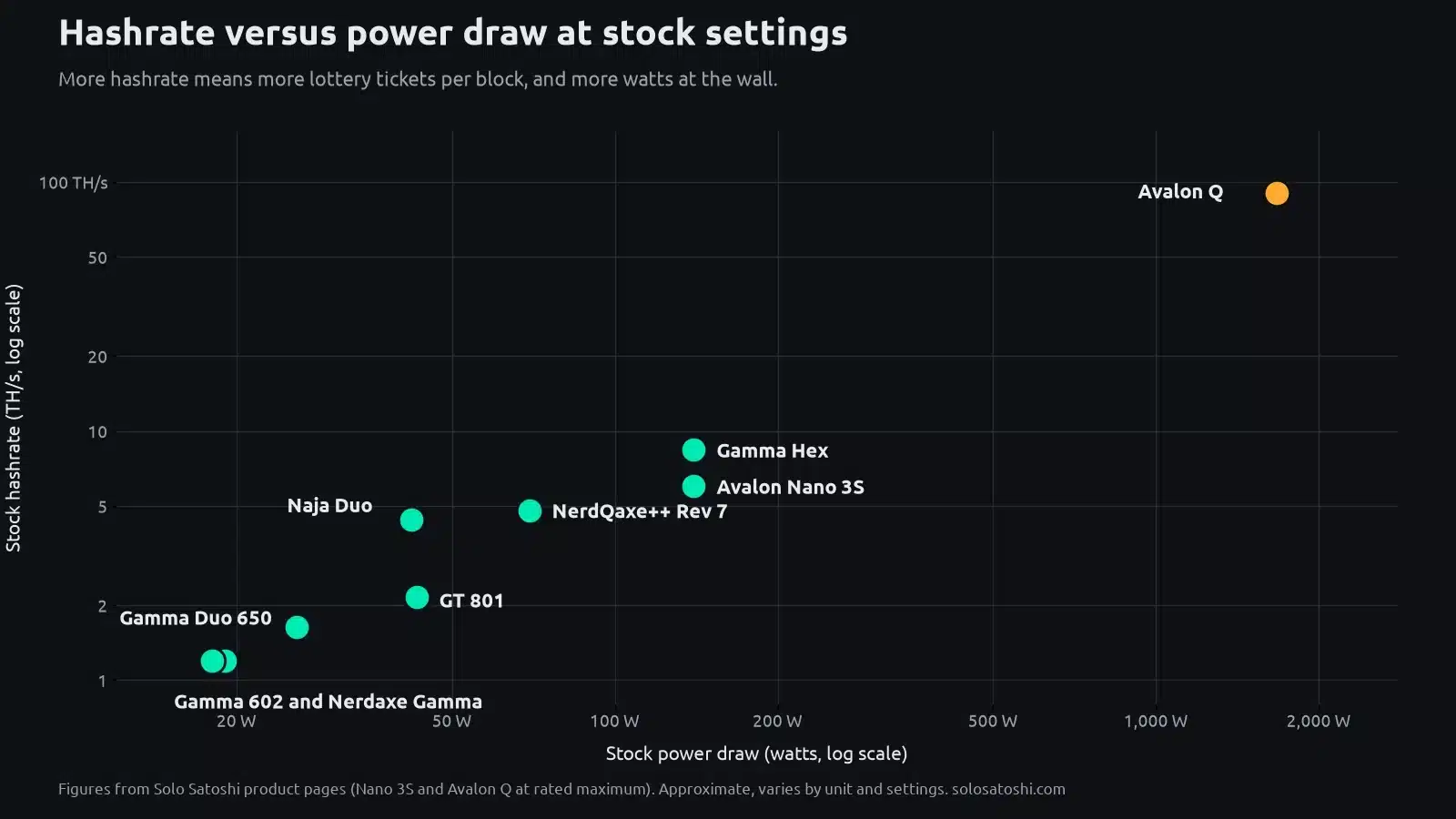
Power supply: the Gamma 602, Duo 650 and Nerdaxe Gamma use 5V barrel jacks. The GT 801, Naja Duo and NerdQaxe++ use 12V XT30. Never mix them up.
The Nano 3S includes its adapter, and the Avalon Q plugs into 110 to 240V AC, so size its circuit with the 80% rule.
How loud are lottery miners?
Only some product pages publish a noise number. The Gamma Hex lists 30 dB, the Nano 3S 30 to 40 dB and the Avalon Q 45 to 65 dB. The small Bitaxe and Nerdaxe boards publish none.
Here is what is on the record:
- Bitaxe Gamma Hex: 30 dB, helped by liquid cooling instead of a fast axial fan.
- Avalon Nano 3S: 30 to 40 dB published by Canaan, with 30 dB measured at 25 C in Low mode.
- Bitaxe Naja Duo: the 92 mm slim fan is rated 22.4 dBA max. That is a fan rating, not a measurement of the whole miner.
- Avalon Q: 45 to 65 dB depending on mode, per Canaan. Eco mode is quieter than the higher modes.
- Gamma 602, Duo 650, Nerdaxe Gamma, GT 801 and NerdQaxe++: no figure is published. Their small fans speed up with temperature, so a cooler room is usually quieter.
Treat these numbers as a guide, because manufacturers measure differently and a small fan can sound sharper than a larger one at the same decibel level.
If noise matters, put the miner on a shelf or in another room and keep airflow clear.
How do you choose a lottery miner?
Choose by your space, your outlet and how much you like to tinker, because every miner is the same kind of lottery ticket.
| If you want | Look at | Why |
|---|---|---|
| Lowest price and a simple start | Bitaxe Gamma 602 | About 1.2 TH/s, from $61 |
| A color screen | Nerdaxe Gamma or NerdQaxe++ | 1.2 TH/s or about 4.8 TH/s |
| A step up without much more power | Bitaxe Gamma Duo 650 | About 1.63 TH/s, 25.8 W |
| Most hashrate per watt on a desk | Bitaxe Naja Duo | About 9.5 J/TH at stock |
| An app-controlled miner | Avalon Nano 3S | Three power modes, 6 TH/s |
| High hashrate and a listed 30 dB | Bitaxe Gamma Hex | Liquid cooled, about 8.4 TH/s |
| The most tickets, and the circuit for it | Avalon Q | 90 TH/s, 45 to 65 dB |
Open source: the Bitaxe, Nerdaxe and NerdQaxe++ boards run open firmware, and you can read the AxeOS firmware on GitHub.
Want to start smaller or cheaper? Read our USB bitcoin miner guide first, then come back to this list.
The solo miners category lists everything built for this kind of play.
How do you set up a lottery miner?
Power the miner, join its setup Wi-Fi on 2.4 GHz, open its dashboard or app, add a solo pool and your Bitcoin address, then confirm accepted shares.
Follow our step-by-step Bitaxe setup for each board and its AxeOS dashboard.
Lottery mining vs pool mining: what is the difference?
With lottery (solo) mining you keep the whole block reward if you find a block, and nothing otherwise. With pool mining, miners combine hashrate and split each reward, minus fees.
See how the options compare in our best solo mining pool guide.
Frequently asked questions
Quick answers to the questions we hear most about the best bitcoin lottery miners.
Which is the best bitcoin lottery miner?
Do solo miners work?
What are the odds of solo mining a block?
Are solo miners worth it?
How do I set up a bitcoin lottery miner?
What is the difference between lottery mining and pool mining?
How loud are bitcoin lottery miners?
How much electricity does a lottery miner use?
What power supply does a lottery miner need?
Shop bitcoin lottery miners at Solo Satoshi
The best bitcoin lottery miner for most people is the one they will actually leave running. It is quiet enough for the room, small enough for the desk, and cheap enough to be fun.
If you are unsure, the Bitaxe Gamma 602 is the easy first ticket, and the Naja Duo and NerdQaxe++ are the natural upgrades.
Compare your chances first with the odds calculator.
Solo Satoshi has shipped more than 60,000 devices to customers in over 70 countries and is an authorized Canaan distributor.
Specifications come from each Solo Satoshi product page, checked on November 1, 2026. Prices and stock change, so the product pages are the final word.
Odds are statistical estimates based on stock hashrate and network hashrate from mempool.space, and no miner is guaranteed to find a block.