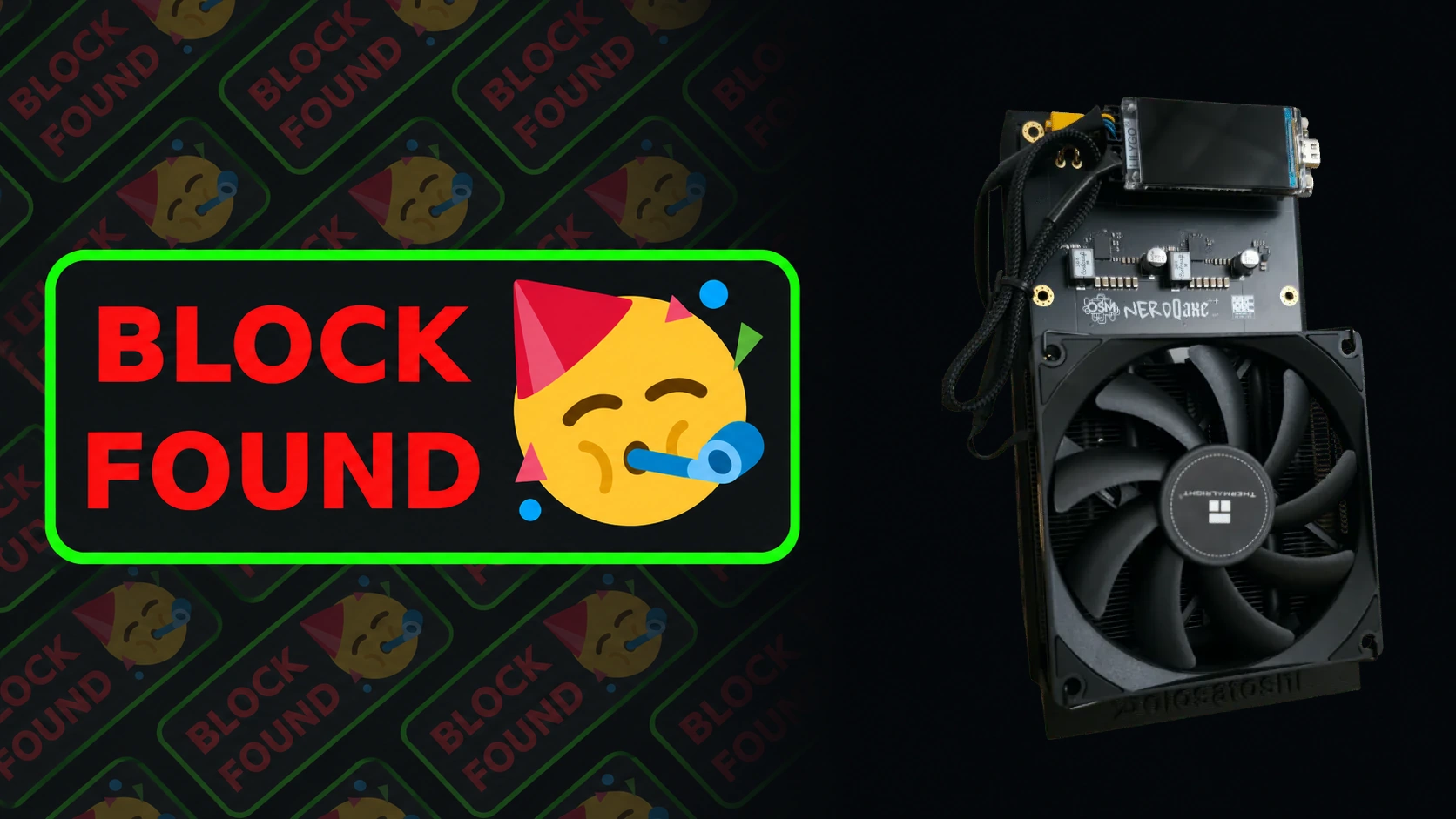
NerdQaxe++ miners have been reported behind accepted Bitcoin blocks. The three cases below involve OCEAN, a customer’s self-hosted Public Pool setup, and Noderunners. Each block can be checked on-chain; hardware attribution comes from the accompanying operator or pool evidence.
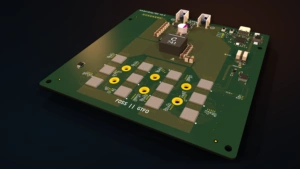
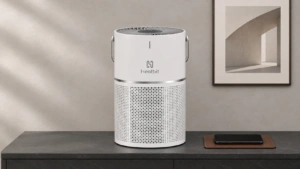
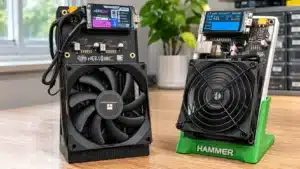
These cases span September 2025 through April 2026. They illustrate different payout arrangements and levels of supporting evidence, rather than an exhaustive registry of every NerdQaxe++ win. The Revision 7 product photograph in the hero illustrates the current miner family, not the hardware revision used in every historical case.
Quick overview
- Three block records: Blocks 913272, 920440, and 944078 are accepted Bitcoin blocks associated with NerdQaxe++ hardware reports.
- Different payouts: The OCEAN case used shared rewards. The Public Pool and Noderunners cases were reported as solo arrangements; a total block reward is not automatically one worker’s personal payout.
- The customer’s build: The block 920440 operator reported six NerdQaxe++ Revision 6 units plus an Avalon Q at 120–130 TH/s combined.
- The single-unit report: Block 944078 is associated with a worker named NerdQaxe++ and a historical one-day average of 4.82 TH/s. A worker label alone does not independently identify physical hardware.
- Long odds: At 4.8 TH/s and the historical difficulty of about 138.97 T, the mean waiting time is about 3,940 years, with roughly a 0.0254% chance over 365 days if both inputs stay fixed.
- Purchase attribution: Only the block 920440 customer case is identified here as Solo Satoshi-supplied hardware. The other cases are community reports.
What Is NerdQaxe++?
NerdQaxe++ is an open-source, four-ASIC Bitcoin mining platform in the NerdAxe hardware family. A compatible miner can hash through a shared-reward pool, a hosted solo service, or a privately operated mining service connected to a Bitcoin node.
Board revisions, firmware, cooling, and power delivery affect operating specifications. The historical worker readings below describe particular reported setups; they are not specifications or benchmark results for every NerdQaxe++.
The Three Documented Block Cases
The ledger separates accepted block records, reported hardware, reward arrangements, and purchase attribution. A blockchain explorer can confirm a block and its outputs, but it does not certify a physical miner model or retailer.
| Block and UTC date | Reported hardware and hashrate | Service and reward context | Evidence and Solo Satoshi purchase |
|---|---|---|---|
| 913,272 September 5, 2025 |
NerdQaxe++; approximately 4.8 TH/s reported. | OCEAN shared rewards. Total coinbase: 3.13410405 BTC; not the worker’s individual payout. | OCEAN/DATUM block record; community hardware attribution. Purchase from Solo Satoshi not confirmed. |
| 920,440 October 23, 2025 |
Six NerdQaxe++ Revision 6 units plus an Avalon Q; 120–130 TH/s combined, according to the operator. | Private Public Pool on Umbrel. Total coinbase: 3.14115228 BTC. | Operator identified Solo Satoshi Revision 6 hardware and attributed the winning work to a NerdQaxe++. |
| 944,078 April 7, 2026 |
Reported single NerdQaxe++; historical one-day worker average of 4.82 TH/s. | Noderunners solo service. Total coinbase: 3.13206403 BTC. | Noderunners block record and named worker evidence. Purchase from Solo Satoshi not confirmed. |
Attribution: The block 920440 customer identified Revision 6 miners from Solo Satoshi. No Solo Satoshi purchase is confirmed here for blocks 913272 or 944078.
Block 913272: NerdQaxe++ Reported Through OCEAN
On September 5, 2025, NerdQaxe++ hardware was reported behind block 913272 through OCEAN/DATUM. This was a shared-reward pool event, rather than a personal solo jackpot for the worker that supplied the winning hash.
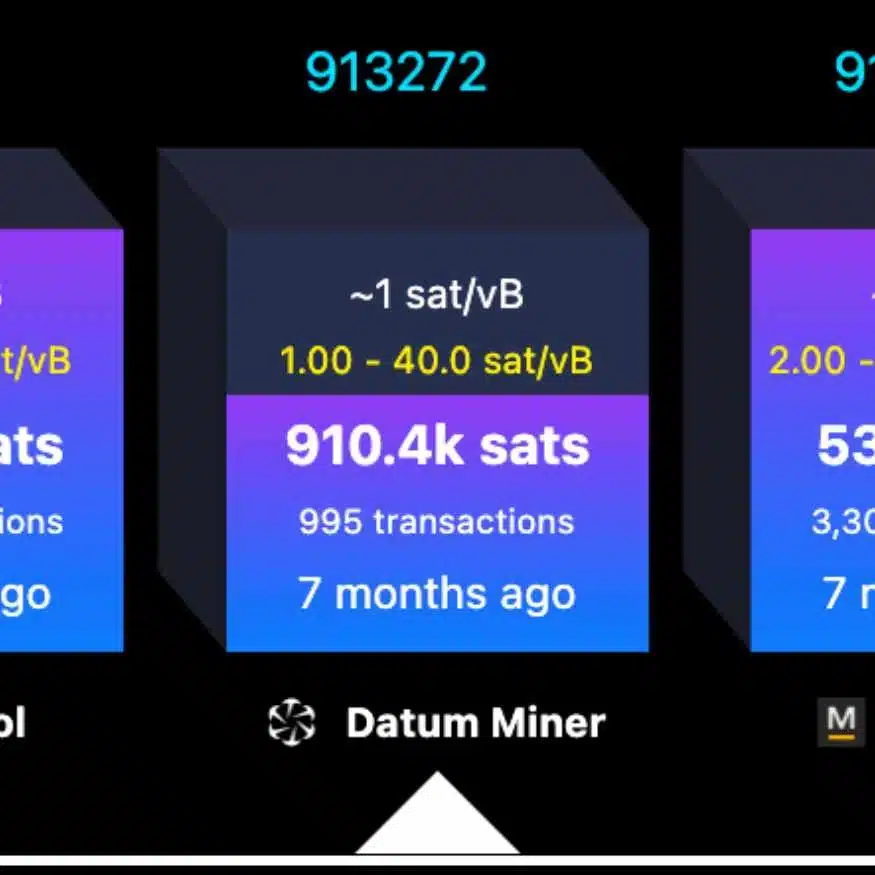
The chain record gives a network difficulty of approximately 136.04 T and total coinbase outputs of 3.13410405 BTC, comprising the 3.125 BTC subsidy and 0.00910405 BTC in fees. The hardware report described approximately 4.8 TH/s.
OCEAN distributes rewards using its TIDES share-accounting system. Its accounting window is not simply the work submitted during the last block round, and finding the block does not entitle one worker to the whole coinbase amount. The physical-device attribution is a community report associated with the OCEAN/DATUM record, not a property encoded in the block.
Block 920440: A Solo Satoshi Customer’s Self-Hosted Win
On October 23, 2025, a Solo Satoshi customer reported finding block 920440 while running a private Public Pool instance on Umbrel. The operator described six NerdQaxe++ Revision 6 units alongside a Canaan Avalon Q, with 120–130 TH/s combined, and attributed the winning work to a NerdQaxe++.
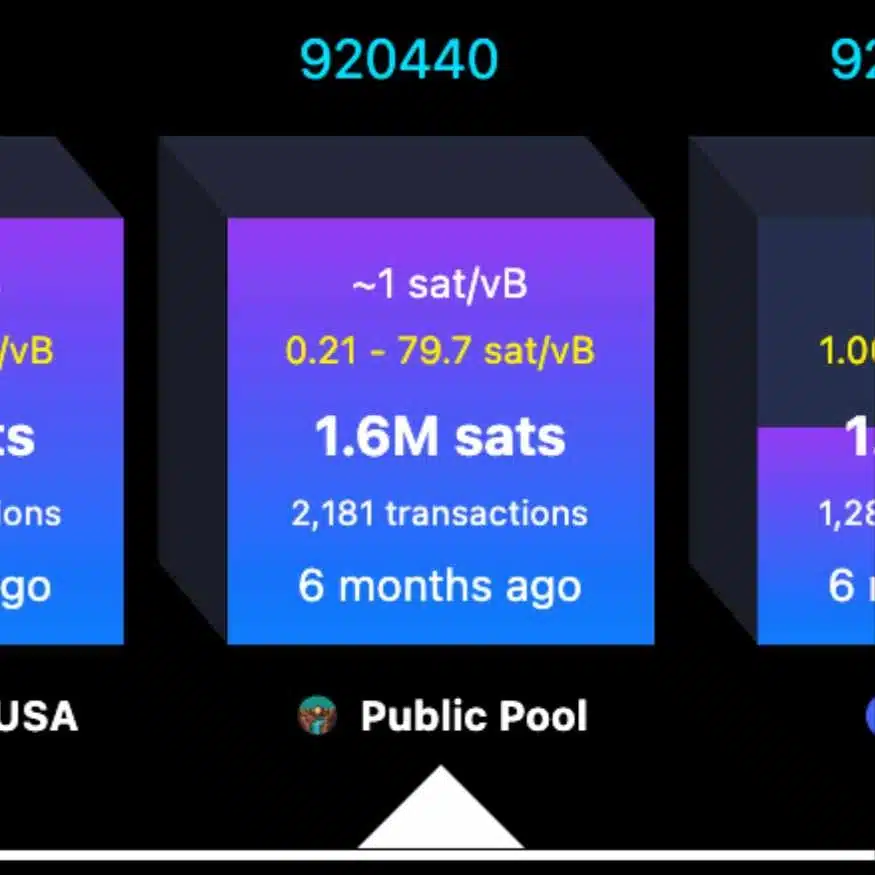
The coinbase contains “Public Pool on Umbrel,” and its outputs total 3.14115228 BTC: the 3.125 BTC subsidy plus 0.01615228 BTC in fees. The operator reported a best-share difficulty of about 2.08 P. That is difficulty telemetry, not a 2.08 PH/s hashrate.
The customer’s Reddit account is the primary source for the hardware story and the reported dollar value of $342,564.17 at the time. The chain confirms the BTC amount, not personal tax liabilities, net proceeds, or what the customer subsequently bought or repaid. Read the customer’s full block 920440 story for the original quotation, setup photo, and source credit.
Block 944078: The Noderunners Single-Unit Report
On April 7, 2026, a single NerdQaxe++ was reported behind block 944078 through Noderunners. The accepted block’s coinbase outputs total 3.13206403 BTC, comprising the 3.125 BTC subsidy and 0.00706403 BTC in fees.
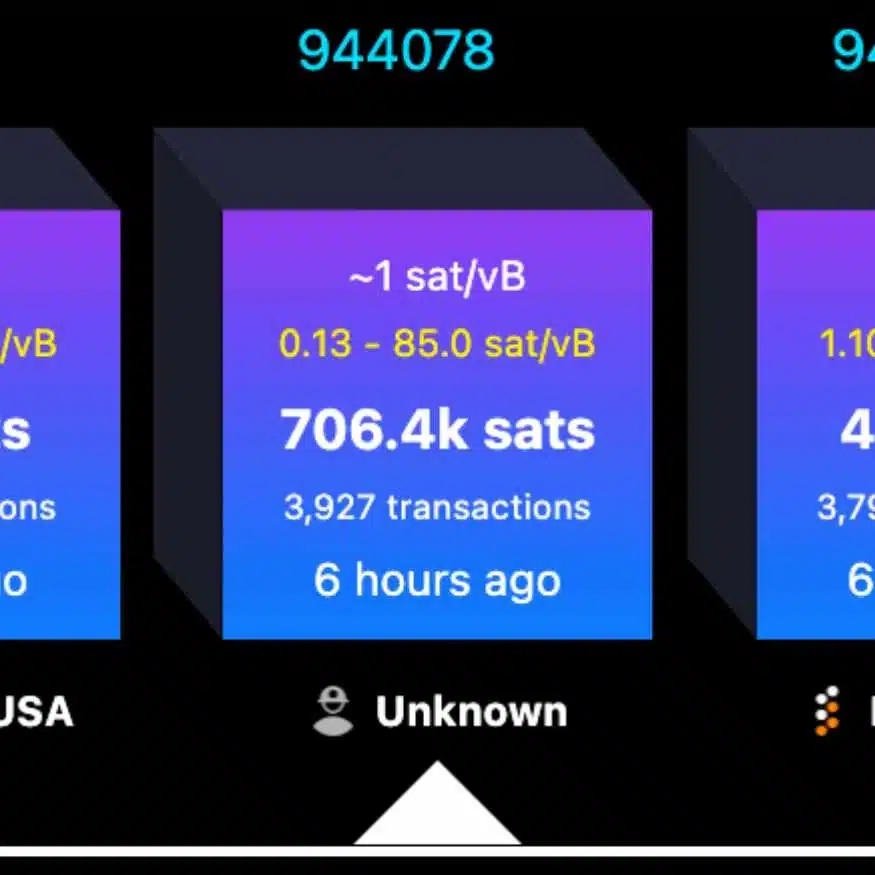
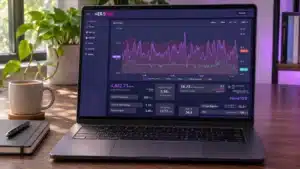
The Noderunners pool page lists this block, and the coinbase contains its name. Mempool.space now identifies Noderunners; the Unknown label in the historical image reflects that capture, not proof that the operator was unidentifiable or self-hosting.
What Did the Noderunners Worker Dashboard Show?
The historical report recorded a worker named NerdQaxe++, with a one-day hashrate average of 4.82 TH/s and a best share of 217.1 T. Those are service-side observations, not a controlled hardware benchmark or independent proof of the number of physical devices.
| Historical worker metric | Reported value |
|---|---|
| Worker name | NerdQaxe++ |
| Hashrate, 1 minute | 6.53 TH/s |
| Hashrate, 5 minutes | 5.43 TH/s |
| Hashrate, 1 hour | 4.97 TH/s |
| Hashrate, 1 day | 4.82 TH/s |
| Hashrate, 7 days | 4.67 TH/s |
| Last share, displayed timestamp | 2026-04-07 21:01:06; time zone not specified |
| Total shares, displayed value | 13.89 G |
| Best share | 217.1 T |
| Best ever | 217.1 T |
| Network difficulty | 138.97 T |
The named worker record still shows a best-ever share of approximately 217.1 T, supporting that part of the historical account. Its live hashrate and share totals have changed, so the figures above should be read as a historical snapshot. The last-share time is reproduced as displayed; its time zone was not established, and it should not be equated with the block’s UTC timestamp of 18:09:21.
The reported best share exceeded the block’s approximately 138.9669 T difficulty. Bitcoin acceptance still requires the candidate block to satisfy all consensus rules. These records support the reported case, but do not establish a global “first single-unit” claim.
What Are the Odds of a NerdQaxe++ Finding a Bitcoin Block?
At 4.8 TH/s and the historical block 944078 difficulty of approximately 138.9669 T, the mean time is about 3,940 years, with roughly a 0.0254% chance over 365 days. These are fixed-input probability estimates, not a deadline or a current network forecast.
The Bitcoin developer mining guide explains the target-based proof-of-work process. Using difficulty D and effective hashrate H in hashes per second, the standard difficulty-based approximation gives:
- Expected hashes: D × 232.
- Mean time in seconds: D × 232 ÷ H.
- Chance within t seconds: 1 − exp(−H × t ÷ (D × 232)).
| Continuous mining period | Chance at the fixed historical assumptions |
|---|---|
| One day | 0.000069% (approximately 1 in 1,439,184) |
| 30 days | 0.002084% (approximately 1 in 47,973) |
| 365 days | 0.025358% (approximately 1 in 3,943) |
These calculations use uninterrupted hashing, constant effective hashrate, and fixed difficulty, with rounded outputs. A 30-day month is defined explicitly. A per-block network-share estimate needs a separate network-hashrate assumption and should not be mixed with a day, month, or year of attempts.
A mean waiting time does not accumulate progress toward an inevitable win. Prior unsuccessful hashes do not make the next independent attempt more likely. Use the Bitcoin mining calculator with current inputs rather than treating this April 2026 example as live data.
Shared Rewards, Hosted Solo, or Self-Hosting?
Choose the reward arrangement first: shared pools distribute rewards across eligible contributors, while solo arrangements reserve a found block’s proceeds for the configured finder, subject to applicable service fees and terms. Self-hosting additionally puts the node and mining service under the operator’s control.
- OCEAN: The listed event used shared TIDES rewards, so the winning worker’s payout differs from the total block reward.
- Private Public Pool: The block 920440 operator ran the service and node on their own Umbrel system.
- Noderunners: The listed event used a hosted solo service. Review its published terms rather than assuming every hosted pool uses the same fees or reward method.
Our mining-pool guide explains reward methods. The Umbrel solo-mining guide covers one self-hosted setup route. Running your own service brings maintenance and uptime responsibilities and does not make public blockchain activity anonymous.
NerdQaxe++ Block-Case Timeline
The three listed events occurred within about seven months, from September 2025 to April 2026. The intervals below are differences between UTC calendar dates, not measured mining durations for an individual device.
| Block | UTC date | Elapsed days since previous listed case |
|---|---|---|
| 913,272 | September 5, 2025 | First listed case |
| 920,440 | October 23, 2025 | 48 days |
| 944,078 | April 7, 2026 | 166 days |
Solo Satoshi reports more than 60,000 devices sold across its product range since May 2024. That all-device figure does not establish the installed NerdQaxe++ population or its combined hashrate. The frequency of public reports also does not change an individual miner’s probability at a given effective hashrate and difficulty.
What Do These Cases Demonstrate?
These cases illustrate that desktop-scale ASICs can supply qualifying Bitcoin work through different mining arrangements. Their practical significance is participation and operator choice, rather than a guaranteed financial return.
The OCEAN case illustrates a reported small worker contributing a winning hash to a shared-reward pool. The Public Pool case describes a customer operating the miner, service, and node. The Noderunners case records a reported single-unit hosted-solo win.
“Three confirmed block wins in under eight months. Block #944,078 is the one that changes the conversation, because it was a single unit. Not a cluster, not a farm. One NerdQaxe++ on a desk found a full Bitcoin block against the entire network.”
Matt Howard, CEO, Solo Satoshi, commenting on the reported cases.
The hardware attribution in these cases rests on operator and pool reports. The records do not establish a global first or an exhaustive history of NerdQaxe++ wins.
Current Hardware and Related Guides
Solo Satoshi’s current NerdQaxe++ listing is Revision 7, with published stock specifications of approximately 4.8 TH/s at 69.5 W. Package choices include power-supply options; historical Revision 6 or worker-dashboard values should not be substituted for the current configuration.
Solo Satoshi assembles and tests these devices in the USA and ships from Conroe, Texas. Check the current listing for configuration, stock, shipping conditions, and warranty terms. Overclocked results require suitable power and cooling, vary by unit, and are not guaranteed.
Related NerdQaxe++ Guides
Use the guide that matches your task and exact hardware revision.